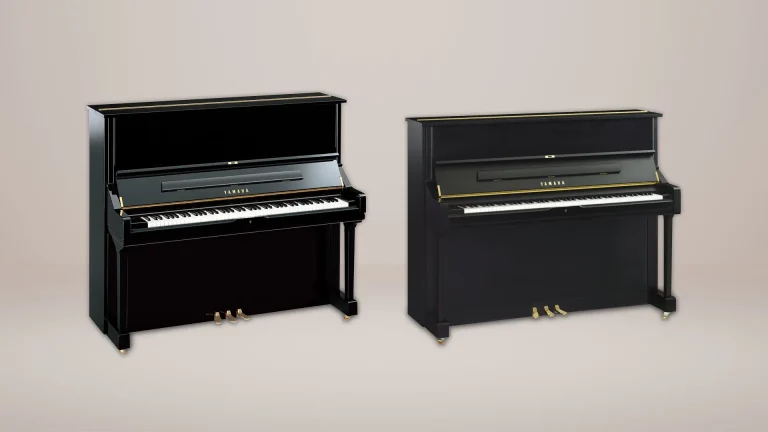
How Many Octaves Does a Piano Have?
Wondering how many octaves are on a piano? Read our blog to find out everything you need to know about the piano range.
The piano is a versatile and unique musical instrument that’s characterized by its extensive range. Since the invention of the pianoforte in the 18th century, the number of piano octaves on a standard piano has changed significantly. But why does the question of how many octaves are there on a piano matter today?
The ability to recognize an octave can help improve your music theory knowledge, in addition to your sight reading and ear training skills. Whether you’re performing a complex piece or composing music of your own, understanding the range of a piano is essential to unlocking its full potential as an instrument. To help you better understand how many octaves are on a piano, we are sharing an important guide to provide more insight.
What Is an Octave on a Piano?
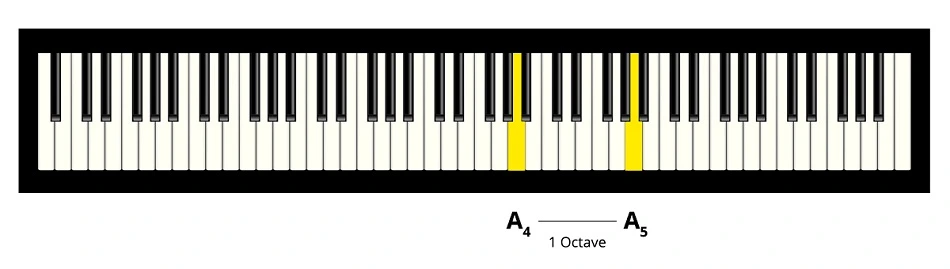
If you’re new to playing the piano, you may be stumped on what is an octave. On a piano, an octave is the distance between one note and the next note in the register above or below which has the same name. For example when looking at the keys on a piano, the distance between A4 and A5 is one octave. On a piano, octave registers are used to identify the note and register in which a key is located which we’ll dive into a little bit later. In this example, “A” refers to the note and the numbers “4” and “5” refer to the octave register.
- On a piano, an octave would look like this:
Now that you’re able to recognize an octave on a piano, you may be wondering how the word octave got its name. The word “octave” comes from the Latin root “octo” which means eight and refers to the 8th note from the 1st note in a diatonic scale. A diatonic scale contains 7 notes within a key and are arranged in a specific pattern of whole and half steps. The most common modes of diatonic scales which you’re likely to encounter first in music theory are major and minor. An example of a major and minor scale in the key of A are shown below:
- A major scale: A – B – C# – D – E – F# – G# – A
- A minor scale: A – B – C – D – E – F – G – A
Being able to identify and play an octave on a piano can also help with improving your sight reading and ear training. Octaves appear frequently in music across all levels, and the ability to recognize these in written music and play them comfortably without looking can make it easier to anticipate hand positioning and play more fluidly. Chopin’s Etude Op.25 No.10 in B minor also known as the “Octave Etude” is a terrific example. This piece showcases how demanding piano octaves can be both technically and musically.
How Many Octaves and Keys Does a Standard Piano Have?
So, when thinking about octaves, it’s also important to know how many keys are on a piano. How many keys on a piano depends on the make and model, but on a standard piano, there are 52 white keys and 36 black keys, for a total of 88 keys. With this in mind, how many octaves does a piano have? With a little math, we can deduce that a standard piano has 7 full octaves, plus 3 extra notes below the lowest C. On a piano, the octave registers 1–7 begin at the lowest C (C1) and extend to the highest B (B7). The notes beneath the lowest C are referred to as sub-contra notes or A0, Bb0, and B0. The highest note on a standard 88 key piano is C8.
Understanding Piano Varieties by Octave Count
The number of octaves on a piano can vary depending on the piano range and the number of keys needed on a piano may vary depending on the piano type. To better understand how many octaves are on a piano and to understand the piano range, we are sharing examples of different types of pianos that you may encounter on the market today.
Extra Large Piano: 92–108 Keys

While this number of keys on a piano isn’t common, there are a few high-end models which are produced today and boast an impressive range of 92 to 108 keys. One notable example is the Bösendorfer 290 Imperial Concert Grand which was first introduced in the early 1900s and features 97 keys spanning a total of 8 octaves. The additional keys can be found on the lower end of the piano and were originally intended to mimic the pitch of the bass pedal pipes on an organ so that transcriptions of Bach’s organ pieces could be played on the piano. Later, famous composers such as Bartok, Debussy, Ravel and many others wrote music to take advantage of this unique range.
Standard Piano: 88 Keys

As explained when sharing how many octaves on a piano, 88 keys is the standard most utilized today, but it wasn’t always this way. In fact, when the pianoforte was first invented in the 1700s, it only had 49 keys. As the instrument gained popularity, manufacturers gradually began designing pianos with larger keyboards so that composers could write music beyond this limited range. In the late 1800s, Steinway & Sons built the first piano with 88 keys and it soon become the industry standard.
This standard design offers a consistent framework for both performers and composers alike. Most piano compositions are written within this range, as notes beyond can be challenging for the human ear to distinguish. Today, you’ll find a wide range of acoustic, hybrid, and digital pianos built with 88 keys.
Large Piano: 85 Keys
Pianos with 85 keys were common in the 1800s, before 88 keys became the standard. These pianos were sufficient for most compositions and the musical demands of that time. Some piano manufacturers throughout the 20th century continued producing 85 key pianos to reduce costs and save space. While rare, you may still encounter some of these pianos on the used market today.
Medium-Large Piano: 61–76 Keys
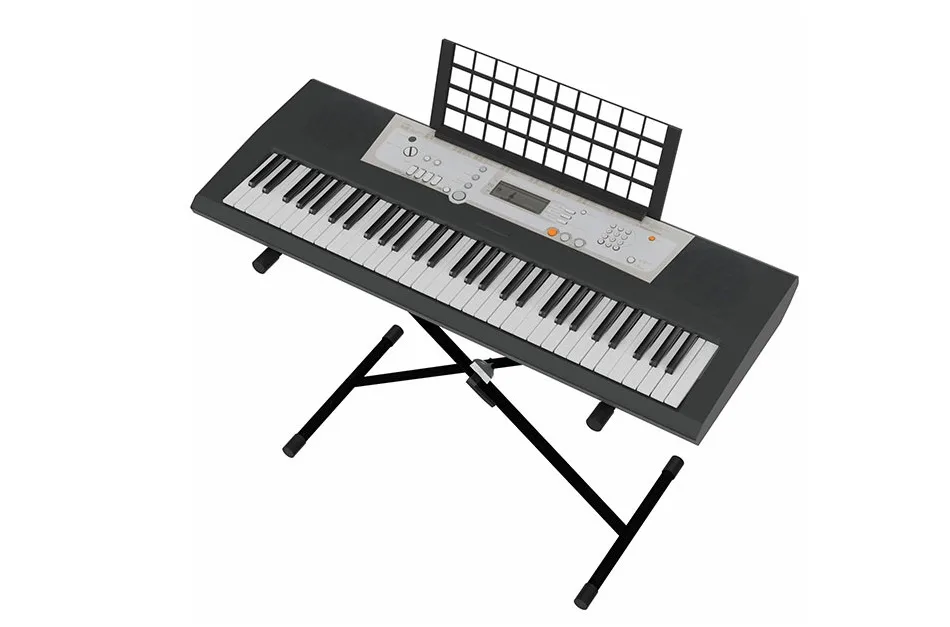
This range of keys is typically found on portable keyboards. Pianos within this range may be ideal if you’re just beginning to learn the basics, however they often come with trade-offs that can affect the playability and sound. It’s also common for students to outgrow this range quickly as their musical studies progress. As your skills develop, your teacher will likely recommend a standard size piano with weighted keys to develop proper technique.
Extra Small — Small Piano: 25–49 Keys
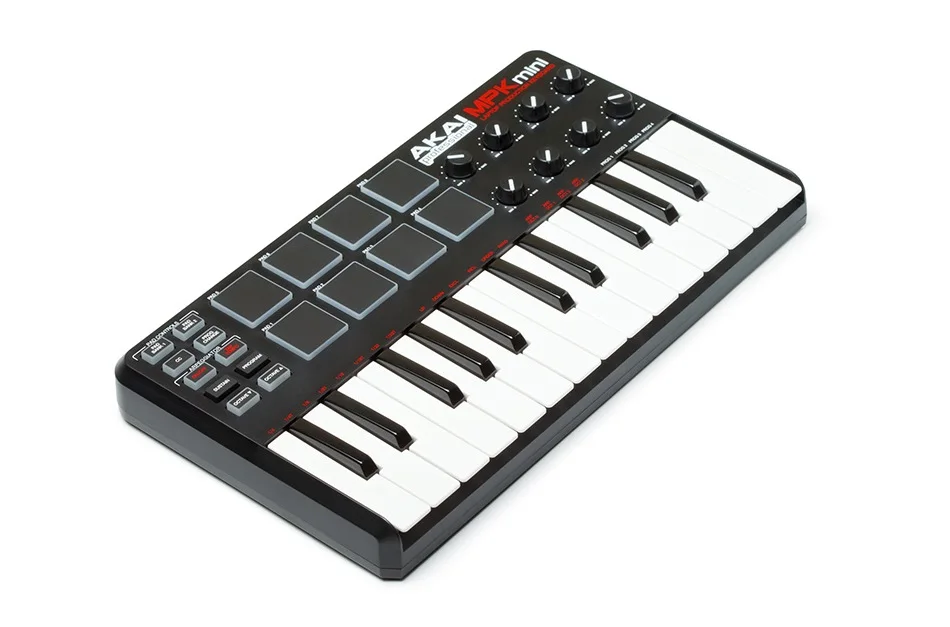
Pianos featuring a key range of 25 to 49 keys are often found on MIDI controllers and small synthesizers. They offer a compact and portable option that is ideal for music production and live set-ups. The smaller range can make playing with both hands difficult and may be better suited for those who want to create bass lines, chord progressions, or melodic hooks where the full range isn’t required. Additionally, it’s worth noting that MIDI controllers and many digital synthesizers do not come with weighted keys or built-in speakers and typically require a connection to an external source for sound output.
Does Octave Range Affect Piano Playing?
The amount of octaves on a piano can impact your piano playing and limit the repertoire you’re able to perform. If you’re new to the piano and just beginning lessons, you probably will not be utilizing the full piano range of 88 keys. However, it’s best to practice on a standard size piano for consistency. Familiarizing yourself with the standard size early on, will make transitioning between different pianos much easier. And that way, whether you’re at home, at your teacher’s studio, or performing in a recital, you will be comfortable with the keyboard layout.
Find Your Ideal Piano at Music Exchange
The ability to identify octaves on a piano will help you build a stronger connection to the instrument’s layout and deepen your music theory knowledge. This knowledge will be especially valuable when it comes time to choosing a piano of your own. For those interested in playing the piano, a standard 88 key piano is highly recommended. Whether you’re learning a new piece, improvising, or composing, having the full piano range of 88 keys ensures you won’t be limited as you grow.
For more information on the best pianos available, or to find a piano teacher to advance your skills, Music Exchange is here to help. Contact us today for expert insight from our team.
Related Posts